
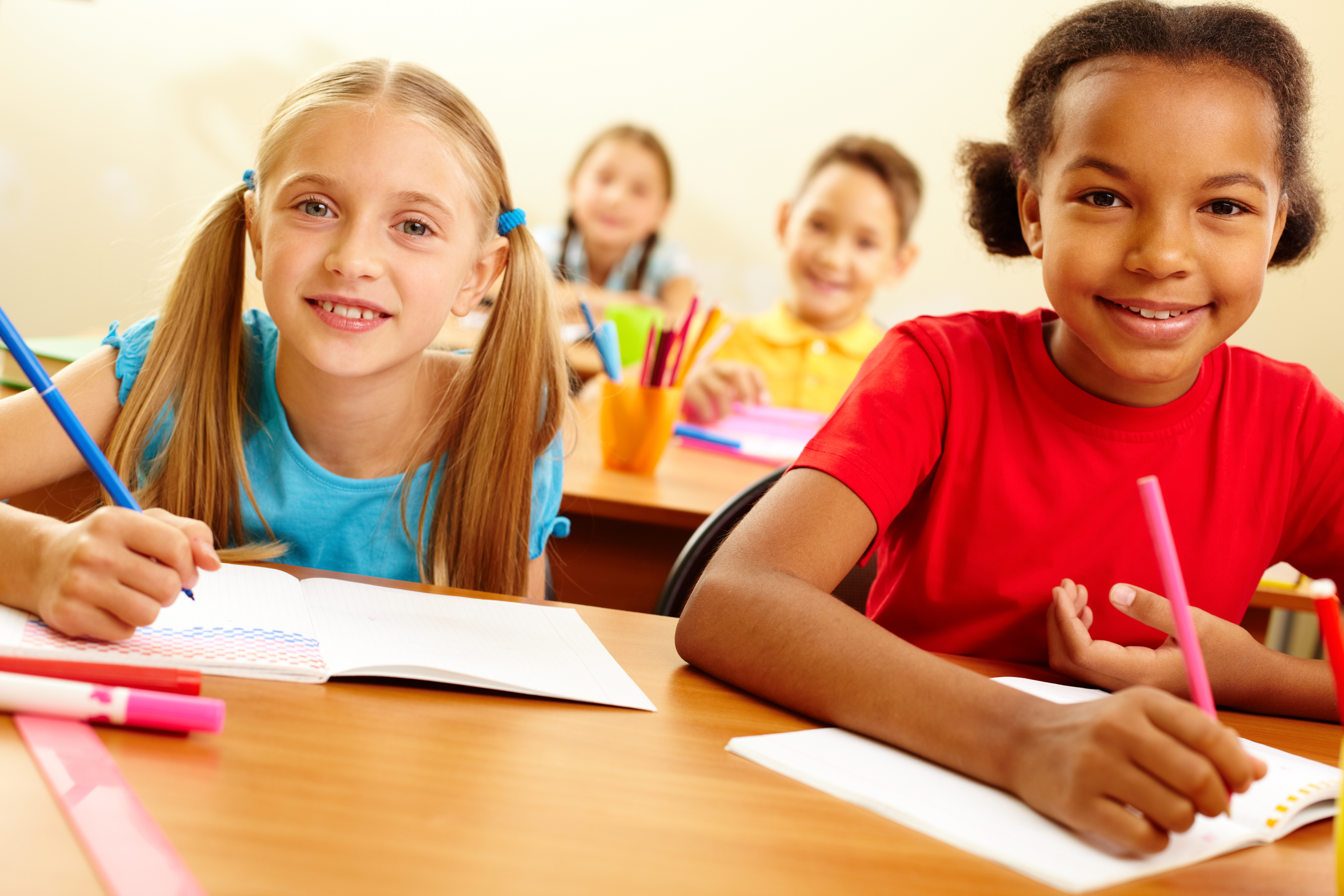
Imagine two children sitting in the same classroom, listening to the same teacher explain the same mathematical concept.
The teacher introduces a new topic, works through a few examples and gives the children exercises to attempt. One child understands the concept almost immediately and begins solving the questions independently. The other struggles to follow the explanation and needs additional examples before making sense of what has been taught.
Both children have received the same instruction. Both have access to the same learning materials. Yet, their experiences are noticeably different.
Does this mean one child is more intelligent than the other?
Not necessarily.
I've had moments with students when one of them was a bit slower to grasp a concept. But when they eventually did, their understanding sometimes had a depth that others had not initially demonstrated. They would begin to connect the concept to real-life situations, and sometimes, even I would be amazed by the connections they made.
One of the important things parents and educators need to understand about education is that children do not all learn at the same pace. Their ability to process information, understand new concepts, retain knowledge and apply what they have learnt can differ considerably.
Unfortunately, academic environments sometimes place too much emphasis on how quickly children complete tasks or understand lessons. This can be particularly challenging in educational systems where the curriculum contains a substantial amount of content to be covered within a limited timeframe.
When this happens, children who require additional time may begin to feel inadequate, even when they possess the ability to understand and excel.
Understanding the different ways children learn is therefore essential to creating an educational environment where every child has a genuine opportunity to develop.
1. The Problem with Comparing Children's Learning Progress
Comparison is a familiar feature of academic environments.
Parents compare examination results. Teachers sometimes compare the speed at which students complete assignments. Children observe their classmates and begin measuring their own abilities against those of others.
I must admit that I've sometimes been guilty of this myself, although I've learnt to recognise it and catch myself more often.
While healthy competition can sometimes encourage improvement, constant comparison can create an unhealthy understanding of academic success.
Consider two students learning fractions. One understands the concept after a single explanation, while the other needs to work with visual representations, practical examples and repeated exercises before gaining confidence.
If both students are expected to demonstrate understanding within the same timeframe, the second student may appear less capable.
However, the real question should not simply be who understood first. It should also be whether each child eventually understands the concept and can apply that knowledge independently.
Children have different starting points. Their previous experiences, exposure to particular subjects, foundational knowledge and individual development all influence how they approach new information.
Equal access to instruction does not automatically produce identical learning experiences.
Recognising this difference allows parents and educators to pay closer attention to individual development instead of making assumptions based on comparison. It also reminds us to be more patient with the child who might simply need a little more time.
2. Why Do Children Learn at Different Paces?
Several factors contribute to differences in children's learning experiences. Understanding these factors can help parents and educators identify what a child needs to make meaningful progress.
A. Differences in Cognitive Development
Children develop their thinking, reasoning, memory and problem-solving abilities over time.
These abilities do not necessarily develop at identical rates. Consequently, two children of the same age may approach the same learning task differently.
For instance, one child may find it relatively easy to identify patterns and solve abstract mathematical problems, while another may understand the same concept better when it is presented through physical objects or practical demonstrations.
This does not automatically indicate a difference in intelligence. It highlights the importance of recognising individual developmental differences.
B. Differences in Prior Knowledge
Learning is cumulative. New knowledge often builds upon concepts and skills that a child has already acquired.
A student learning algebra, for example, needs a reasonable understanding of basic arithmetic, mathematical operations and the use of symbols.
When these foundational concepts are well understood, approaching more advanced topics may become easier.
However, a student with gaps in foundational knowledge may struggle with the new material, even when the student is capable of understanding it.
Sometimes, what appears to be difficulty with a new topic is actually an indication that an earlier concept needs further attention.
This is why effective teaching should not focus exclusively on what is currently being taught. It should also consider what the learner already understands.
C. The Learning Environment
The environment in which a child learns can influence concentration, participation and comprehension.
A classroom with excessive distractions may make it difficult for some children to concentrate. Similarly, an environment where children are afraid of making mistakes may discourage them from asking questions or attempting unfamiliar tasks.
Other factors, including access to learning materials, the availability of support at home and the general atmosphere surrounding education, can also influence learning experiences.
Children need environments that encourage curiosity, questions, participation and the freedom to make mistakes while learning.
D. Teaching Methods and Instructional Approaches
Not every child responds equally to every teaching approach.
A teacher may explain a concept verbally, but some students may need diagrams, demonstrations, worked examples or opportunities to practise before fully understanding it.
Consider teaching the concept of multiplication.
A child may understand 4 × 3 more easily when shown four groups of three objects rather than being introduced to the multiplication statement alone.
Both approaches communicate the same mathematical idea, but the practical demonstration may provide the additional connection the child needs.
This is one reason effective teaching requires flexibility.
The responsibility of an educator is not simply to deliver information. It is also to consider whether the information is being understood and identify alternative ways of explaining it when necessary.
E. Emotional and Psychological Factors
Learning does not happen independently of a child's emotional experiences.
Anxiety, fear of failure, low confidence and the pressure to meet expectations can affect a child's willingness to participate and attempt challenging tasks.
A child who is constantly criticised for making mistakes may eventually become reluctant to answer questions, even when they have an idea of what the correct answer might be.
On the other hand, an environment that encourages effort, constructive feedback and gradual improvement can help children develop confidence in their abilities.
This does not mean that children should be shielded from challenges. Rather, they should be supported in approaching challenges without feeling that every mistake is a reflection of their intelligence.
F. Individual Learning Needs
Some children experience persistent difficulties with particular aspects of learning and may require additional educational support.
These difficulties can relate to reading, writing, mathematics, attention, language processing or other areas of development.
For example, dyslexia is a specific learning difficulty that primarily affects the development of reading and spelling skills. Dyscalculia is associated with persistent difficulties in understanding and working with numbers and mathematical concepts.
Such difficulties should not be dismissed as laziness or a lack of intelligence. Neither should every child who takes longer to understand a topic automatically be assumed to have a learning difficulty.
Where challenges persist despite appropriate teaching and support, parents and educators should consider seeking professional guidance or an appropriate educational assessment.
Early identification can help children receive the support they need.
3. Learning Slowly Does Not Mean Learning Poorly
One of the misconceptions surrounding academic performance is the assumption that children who understand quickly are necessarily better learners.
Learning speed is important in certain academic situations, but it is not the only indicator of understanding.
Consider these five aspects of learning:
Speed of understanding: How quickly does a child grasp newly introduced information?
Depth of understanding: Does the child understand the underlying principles, or have they simply memorised a procedure?
Retention: Can the child remember and explain what was learnt after some time has passed?
Application: Can the child use the knowledge acquired to solve unfamiliar problems or address real-life situations?
Problem-solving: Can the child reason independently, make connections and develop solutions when faced with a challenge?
These abilities are related, but they are not identical.
The objective should therefore be to develop genuine understanding, not merely reward speed.
4. The Effects of Constantly Comparing Children
Children are gradually developing their understanding of themselves and their abilities.
The feedback they receive from parents, teachers and other significant people can influence how they perceive their academic potential.
When children are repeatedly compared with their peers, several negative consequences may arise.
Reduced academic confidence: A child who is constantly reminded that others perform better may begin to doubt their own abilities.
Fear of making mistakes: When mistakes attract ridicule or harsh criticism, children may become unwilling to attempt challenging questions.
Unhealthy competition: Instead of focusing on personal improvement, children may become excessively concerned with outperforming others.
Superficial learning: Some children may prioritise memorising answers and completing tasks quickly rather than developing a proper understanding of what they are learning.
Negative self-perception: Repeatedly describing a child as unintelligent, lazy or a slow learner can influence how that child views their own capabilities.
This is why educators and parents should be careful with the language they use when discussing children's academic performance.
A child who needs additional time is not necessarily a child who lacks potential.
Instead of asking, "Why can't you understand this when everyone else has?", a more constructive question would be, "What part of this do you find difficult, and how can we approach it differently?"
The difference between these two questions is significant. One creates pressure; the other creates an opportunity to identify and address a learning need.
5. What Can Parents and Teachers Do Differently?
Recognising that children learn at different paces is only the beginning. The next step is to create learning experiences that accommodate individual needs while maintaining appropriate academic expectations.
Here are some practical ways parents and educators can help.
1. Pay Attention to Individual Progress
Rather than constantly comparing a child with classmates or siblings, pay attention to the progress the child is making.
Has the child improved in reading? Can they now solve questions they previously struggled with? Are they asking more questions and demonstrating greater confidence?
These are meaningful indicators of development.
Progress may not always be dramatic, but consistent improvement deserves recognition.
2. Identify Gaps in Foundational Knowledge
When a child struggles with a particular topic, avoid assuming that the difficulty begins with the current lesson.
Sometimes, the child may have missed an important concept from an earlier stage of learning.
For example, a student struggling with fractions may need additional support with division, multiplication or basic number relationships.
Identifying and addressing these gaps can make subsequent learning considerably easier.
3. Explore Different Teaching Approaches
If a child does not understand a concept after one explanation, repeating the exact same explanation may not always be the best solution.
Try using diagrams, practical examples, demonstrations, educational games or step-by-step illustrations.
Different approaches can provide new ways of connecting unfamiliar information to what a child already knows.
4. Give Children Opportunities to Practise
Understanding a concept during a lesson and applying it independently are two different stages of learning.
Children need opportunities to practise, make mistakes, receive feedback and improve.
Practice should be purposeful and appropriate to the child's current level of understanding.
The goal is not to overwhelm the learner with endless exercises but to provide enough meaningful opportunities to develop confidence and competence.
5. Recognise Improvement, Not Just High Scores
Examination results are useful indicators of academic performance, but they do not always tell the complete story of a child's learning journey.
Parents and teachers should also recognise improvements in comprehension, participation, reasoning, consistency and independent problem-solving.
Acknowledging these developments helps children understand that learning involves growth, not just the achievement of particular scores.
6. Seek Additional Support When Necessary
Patience is important, but persistent learning difficulties should not simply be attributed to a child's individual learning pace.
Where a child continues to experience significant difficulties, even after appropriate instruction and support, further investigation may be necessary.
Parents and teachers should work together to identify possible learning barriers and seek professional guidance where appropriate.
Every child deserves access to the support necessary for meaningful academic development.
6. Every Child Deserves the Opportunity to Understand
Education should not become a race in which every child is expected to reach the same destination at precisely the same time.
Children need guidance, instruction, encouragement, appropriate challenges and opportunities to develop their abilities.
Some may grasp certain concepts quickly. Others may need additional explanations, practical experiences or more time to develop confidence.
What matters is that children are not prematurely defined by the speed at which they learn.
This does not mean that academic expectations should be lowered or that children should be allowed to remain comfortable without making progress. Rather, it means that expectations should be accompanied by appropriate teaching, patience, support and a genuine commitment to helping every learner improve.
For parents, this means looking beyond examination scores and paying attention to the actual development of their children.
For teachers, it means recognising that effective instruction involves understanding the learner as much as understanding the subject being taught.
And for educational institutions, it means creating environments where individual differences are recognised and learning opportunities are designed to help children make meaningful progress.
The goal of education should not be to make every child learn at the same pace. It should be to give every child the opportunity, guidance and support to learn, understand and reach their potential.
Further Reading
The following resources provide additional information on some of the educational concepts discussed in this article: